
17 June 2026 · Heart & Soul Reflections
Finding Beauty in Difficult Places: A Reflection on Attention, Gratitude and Everyday Grace
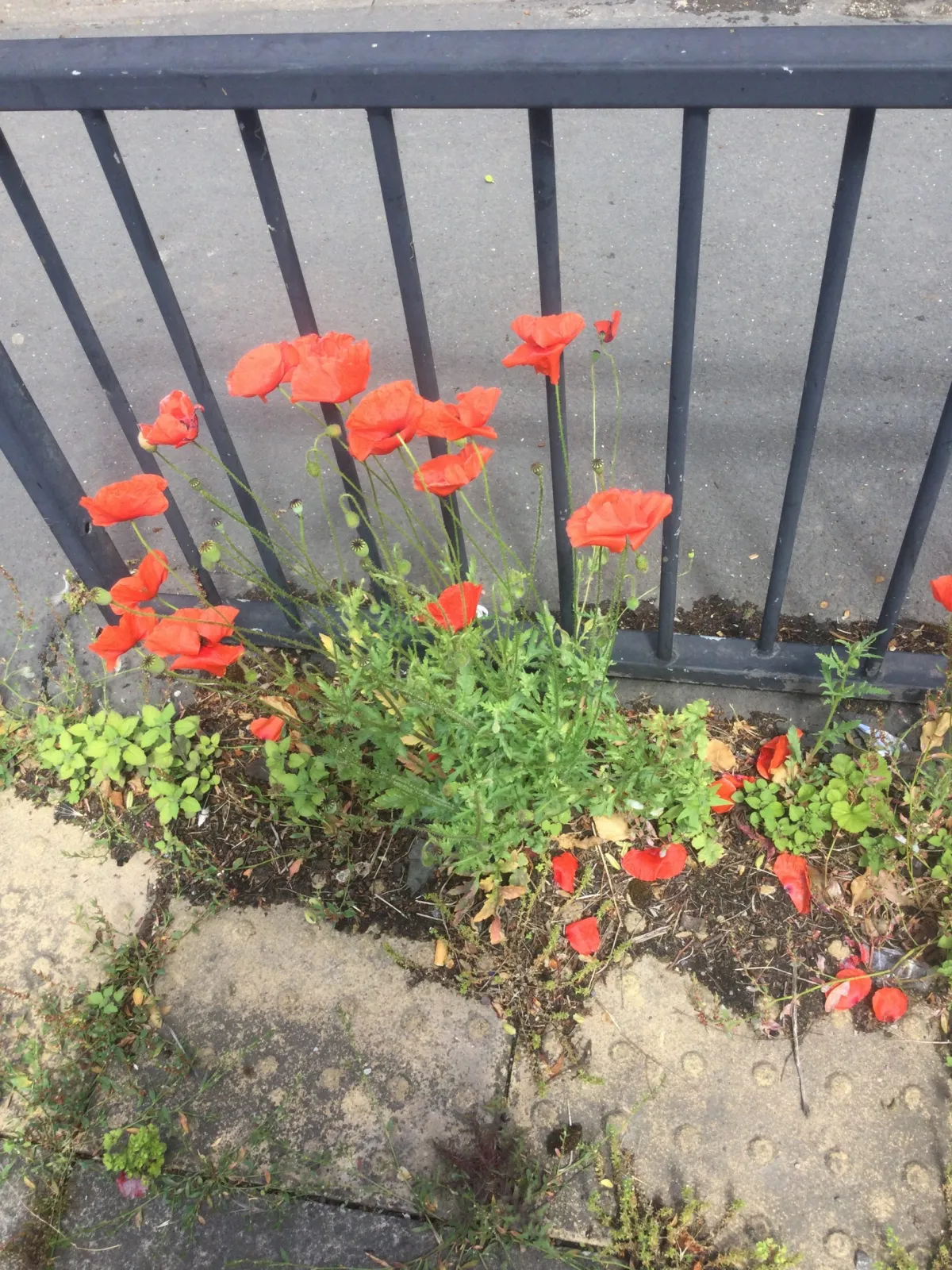
After months of uncertainty, we have finally found somewhere stable to live. I should feel relieved. In many ways, I do.
Yet the truth is that this wasn't somewhere I would ever have consciously chosen to live.
Now what do I do?
The spiritual path is often presented as something that is always uplifting, calming, peaceful, even blissful. These are some of the reasons why we seek a spiritual path. It appears attractive, perhaps a better alternative to everyday "normal" life. But, for me, and many others, a soul-led life does not always look the way it is sometimes presented.
In a Difficult Place
As a person who has been on the spiritual path for over 20 years, I do what I can to make my soul sing as often as is practically possible. That has included making a conscious choice to live in locations that make it easy for me to "vibe high". I'm a Libran! I thrive in environments that are aesthetically pleasing, full of nature and green spaces, with easy access to culture and, more recently, where the air is clean and life is relatively peaceful.
However, that is not our practical reality right now.
The only place that was affordable, dog-friendly and available for us to move into quickly was in a location that is challenging.
We are now living in a highly urban area. Green space is virtually non-existent, aside from a small patch of grass in the tiny garden that comes with our accommodation.
It is busy and close to a major motorway. There are constant traffic fumes. Our neighbours, although kind and friendly people, are heavy cigarette smokers, and the smoke seeps into the air and into our home, especially now, in the Summer, when the windows are open or we are sitting in the garden. There is no "fresh air" to speak of, just pollution.
On top of this, our 15-year-old fur baby, Tommy, who has a heart murmur, has been having a few heart-related coughing episodes, which makes me wonder whether his condition could be worsening, albeit slowly. We know this is inevitable at some point, but we don't want him to suffer.
In other words, there are many uncomfortable or negative factors that I could focus on each day right now, and not just in my own life, but also in relation to the country I live in and the world in general.
But I know that if I allow my mind to go down that route, it will negatively impact my emotional, psychological, physical and spiritual wellbeing.
I also believe in energy. I believe my energy impacts others on some level, and so I do my best, for myself, my family and the wider community, to manage my energy and be mindful of what I put out into the world.
Attention Shapes Our Experience
As someone who has been involved in the field of psychology for a long time, I understand that what we give our attention to, what we allow our minds to focus on, increases its impact on us, whether that is for good or bad.
Our brains are naturally biased towards threat, problems and what is wrong. This is for good evolutionary reasons. Psychologist and meditation teacher Rick Hanson describes this as our inbuilt "negativity bias". He explains that our brains are like "Velcro" for negative experiences—they stick—whereas they are more like "Teflon" for positive experiences, making them much harder for us to absorb and remember.
I've also learned, however, that even though our brains are wired this way, we can train our minds to notice and absorb positive experiences. It takes practice, but it is possible.
This is not about avoiding suffering or pretending difficulties don't exist, which is sometimes referred to as "spiritual bypassing".
Nor is it "positive thinking"—trying to replace a negative thought with a positive one.
What I'm referring to is simply choosing not to let these difficulties consume me.
Every day I have a choice about where I place my attention.
There is a Buddhist teaching, referred to as "The two arrows". The first arrow is the pain life inevitably brings. The second arrow is the suffering we create through our thoughts, resistance and fixation, or rumination, on what we cannot change.
I cannot stop the traffic noise or the smell of cigarette smoke.
But I can notice when my mind starts to become trapped in stories about them and redirect my attention towards where there is beauty, where there is something sacred, and where there is nature.
The Daily Choice: Looking for the Sacred in Small Things
Therefore, I make a conscious choice, and effort, every day to find positive things, even if they are only small things.
The solitary flower in bloom by the roadside as I walk Tommy.
The sound of a blackbird singing his heart out as I sit in the tiny garden.
Hearing church bells ringing for the first time because the wind is blowing in a different direction, something I personally find uplifting because they remind me of the sacred aspects of life.
Every day I carry out this "mind training" practice, catching myself when I notice my mind wanting to focus on one of the many challenging things about living here. I stop that train of thought, let it go, and refocus my attention elsewhere.
I drop the second arrow.
Appreciating and Savouring
If I am unable to spot anything that is obviously uplifting for my soul, such as a flower in bloom, a robin visiting the garden or birdsong, I turn my attention to finding something that I genuinely appreciate in my heart and soul.
Something I can honestly feel grateful for, like having an affordable stable place to stay, the love of my wonderful husband, the fact that Tommy is still with us and still enjoying life or having an able body that enables me to walk the fifteen minutes up the road to a small, well-tended municipal garden and church.
I savour what I can, letting it land more deeply, so it's felt rather than just a thought.
My Reflection
The last few years have been very challenging on so many levels, and I am not where I thought I would be at this point in my life, especially regarding our living situation.
But I refuse to let it beat me.
There is much suffering in life. But we do not have to give that suffering all of our attention.
We cannot control many things, but our minds are something we can often—though not always—exercise some influence over.
We can also choose what we give our attention to. For example, I make a conscious choice not to watch the television news and am very selective about the social media I consume.
This form of mind training that I've described here is simple, but it is not easy, especially in today's modern world with its constant technology and fast pace of life.
A Mindful Practice
What is going on in your life right now?
Do you have a particular challenge or situation that you are unable to change?
Bring that to mind for a moment.
Now see if you can redirect your attention. Look around your surroundings.
Are you able to identify something that uplifts you—a flower, birdsong, a cat basking in the sunshine?
If not, is there something you can bring to mind that you appreciate—a loving partner, a neighbour who takes you to lunch, a relative who calls regularly, a pet who keeps you company, or kind words from a stranger?
Allow yourself to fully feel it emotionally.
Notice how it feels in your body.
And just pause and savour the moment.
It may feel strange to do this at first, and as I mentioned, although it is a simple practice, it does take effort and repetition, but I believe the benefits are worth it.
And for me, it remains one of the most important things I can do to protect my wellbeing, my energy and my capacity to keep moving forward.
If you're navigating a difficult season of life and would like support in reconnecting with yourself, you're welcome to explore my 1:1 Soul Guidance Sessions or book a free 15-minute chat.
Reference
Hanson, R., & Mendius, R. (2009). Buddha's brain: The practical neuroscience of happiness, love, and wisdom. New Harbinger Publications.